

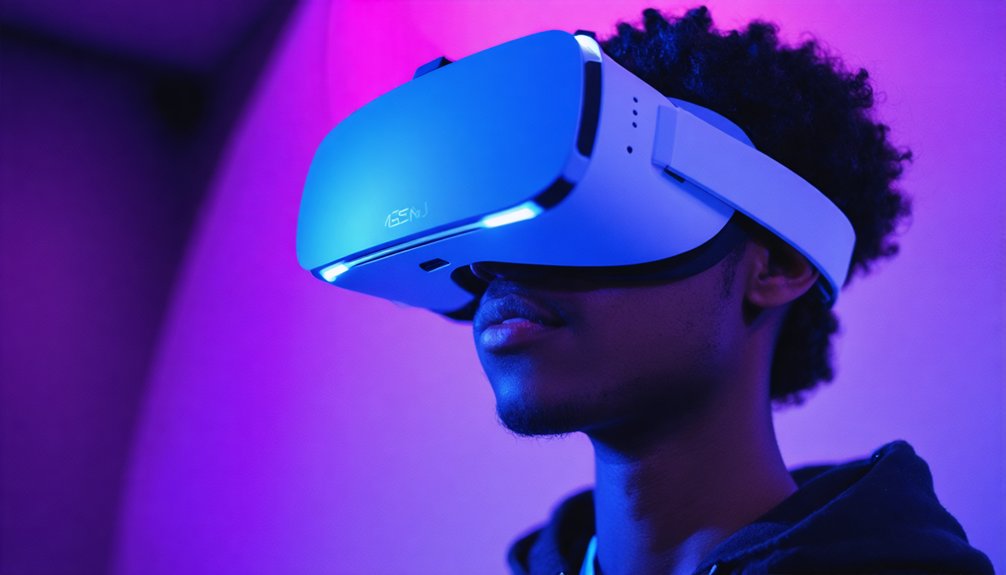

Virtual reality puts you inside realistic, interactive simulations so you can practice skills, explore concepts, and get immediate sensory feedback that boosts retention and confidence. It aligns sight, sound, and motion for embodied learning, supports competency‑based assessment with analytics, and scales via standalone headsets and device management. Thoughtful instructional design and pilot testing keep equity and pedagogy front and center. Keep going and you’ll find concrete uses, evidence, and implementation steps to help you adopt VR effectively.
Key Takeaways
- VR creates immersive, multisensory environments that increase presence, interactivity, and learner engagement for deeper learning.
- High sensory fidelity and embodied interaction improve retention, transfer, and procedural skill performance compared with traditional methods.
- Standalone headsets and device management tools enable scalable classroom deployment with reduced setup and IT complexity.
- Instructional design aligned to clear objectives, scaffolding, and faculty co‑development ensures pedagogical fit and measurable outcomes.
- Pilot programs, accessibility provisions, and LMS integration mitigate equity, infrastructure, and adoption risks during scaling.
What Is Virtual Reality and How It Powers Immersive Learning
Although it looks like sci‑fi, virtual reality (VR) is a practical set of technologies that creates computer‑generated environments you can see, hear, and interact with as if they were real; by combining 3D near‑eye displays, motion and pose tracking, and real‑time sensory feedback, VR delivers the three pillars of presence, interactivity, and immersion that let learners explore otherwise inaccessible spaces and practice skills in lifelike simulations. You step into alternate realities where your brain treats simulated scenes as genuine because sensory fidelity and embodied interaction align visual, auditory, and motion cues. Head‑mounted displays, motion sensors, and real‑time rendering create a responsive space where you move naturally, use gestures, and receive immediate feedback. That combination helps you belong in the learning environment and practice complex tasks safely and confidently. Collaboration between educational institutions and the private sector is recommended to integrate VR into curricula and develop smart, interactive learning experiences. VR learners can train 4x faster than classroom learners. Recent studies show VR adoption is accelerating in schools and training centers with falling hardware costs and richer content libraries, enabling broader adoption.
Evidence of Learning Effectiveness and Retention Gains
When you look at the growing body of research, VR shows clear signals of improving learning and retention across settings: middle school students using immersive VR scored 23% higher on retention tests a week later and reported 37% greater confidence in idea generation, while other studies report 31% better recall and up to 40% higher transfer when training matches real‑world context.
You’ll find consistent gains: embodiment and perceptual fidelity deepen encoding, emotional fidelity boosts recall, and on‑demand practice supports spaced repetition that’s friendly to diverse learners.
Affective measurement reveals learners feel more competent and connected, which sustains engagement and reduces dependence on teacher-led models.
Together, these findings suggest VR can join your instructional toolkit to strengthen memory, increase transfer, and welcome more learners into meaningful, lasting learning experiences. Moreover, research grounded in experiential learning models shows IVR can enhance both cognitive and affective outcomes for middle school learners, including measurable gains in knowledge retention. Recent syntheses also highlight VR’s potential to particularly benefit students with learning disabilities through adaptive, immersive experiences supporting inclusion. Additionally, systematic reviews in health education indicate IVR offers realistic, repeatable practice opportunities that improve procedural competence clinical simulation.
Hardware Advances Enabling Scalable VR Education
As standalone headsets like the Meta Quest 3 shrink costs and complexity, schools and institutions can realistically scale immersive learning without needing bulky PCs or specialized tech staff. You’ll welcome lower price points, Snapdragon XR2 Gen 2 performance, and passthrough AR that blends classrooms and virtual content, making adoption feel communal rather than experimental. Research shows immersive learning helps retention and motivation. Standalone, wireless form factors cut setup time and technical barriers, so educators join instead of opt out. Enterprise-grade device management tools let you deploy, update, and monitor fleets across campuses, ensuring consistency and security. Major brands are already investing in VR training, accelerating tool development and adoption. Meanwhile, comfort optimization—lighter headsets, better weight distribution, and improved ergonomics—means learners stay engaged longer. Together, these hardware advances make scalable VR education practical, affordable, and inclusive. The rise of consumer-ready devices like the Meta Quest 3 has accelerated institutional adoption by lowering both cost and complexity.
VR Use Cases Across K–12, Higher Education, and Corporate Training
Jump into how VR is being put to work across K–12 classrooms, university programs, and corporate training: in K–12, growing student interest and falling headset costs are driving pilots in language labs and immersive history lessons; colleges use VR for high-stakes simulations in medicine, engineering, and space studies with measurable knowledge gains; and companies deploy VR widely for faster, more confident skill transfer in sales, safety, and technical onboarding.
You’ll find K–12 pilots expanding as students embrace Metaverse apps and language platforms win investment, while universities leverage standalone headsets for surgical and engineering practice that boosts retention. North America leads
In corporate settings, VR shortens training time, builds confidence, and supports safety simulations and cultural immersion experiences that make learners feel included and ready.
Designing Pedagogy for Immersive Experiences
Because immersive learning must do more than look impressive, you should start by mapping clear objectives that guide multisensory, interactive design and keep active-learning strategies intact.
You’ll use those objectives to preserve active learning while translating Gallery Walks, debates, and labs into VR.
Center learners by enabling learner agency: let them choose pathways, receive AI-personalized prompts, and reflect on decisions.
Provide teacher guides and scaffolding tools so facilitators retain control and support varied pacing.
Design scenarios with sensory scaffolding—spatial sound, visual cues, haptic hints—that reinforce goals without overwhelming.
Keep authenticity and safe practice spaces for high-stakes skills, and sequence activities progressively so everyone feels capable and included.
This approach meshes technology, pedagogy, and belonging for effective immersive experiences.
Measuring Outcomes: Analytics, Assessment, and Skill Transfer
When you evaluate immersive learning, don’t rely on traditional rubrics alone—VR demands a tailored assessment framework that links specific competencies and measurable performance metrics to real-time, multimodal data. You’ll use competency mapping to align objectives with tasks, motion tracking, eye-tracking, and physiological metrics to capture attention, spatial accuracy, and stress.
Design assessments that convert raw interaction logs into predictive competency scores and adaptive feedback, so learners feel supported and included. Validate skill transfer with controlled studies and longitudinal checks—measure retention and real-world fidelity rather than surface engagement.
Reportable metrics (reaction time improvements, procedural fidelity, retention rates) foster shared standards and belonging among educators and learners, making outcomes transparent, equitable, and actionable without losing nuance.
Implementation Challenges and Institutional Adoption Strategies
Although VR can transform learning, institutions face concrete hurdles before they can scale it effectively. You’ll need clear budget models that account for headsets, high-performance PCs, network upgrades, maintenance, and recurring content updates. Start with pilot programs to test infrastructure, interoperability, and curriculum fit so you avoid costly missteps.
Build educator buy in by offering targeted training, hands-on workshops, and ongoing support that respect teachers’ time. Co-develop content with faculty to align experiences to learning objectives and LMS workflows. Address equity by planning device lending, alternative formats, and accessibility features. Use transparent funding sources—grants, shared-service pools, and open-standard platforms—to distribute risk. With collaborative planning, practical pilots, and sustained support, your community can adopt VR responsibly and inclusively.
Future Trends: AI, Social XR, and the Road to Mainstream Deployment
After you’ve built the policies, pilots, and faculty support that make VR workable on campus, new technologies will shape how those programs grow. You’ll see AI integration personalize pathways, use NLP tutors, and analyze interactions to boost outcomes—expect measurable gains in scores and performance.
Social XR will invite you into shared, photo‑real worlds where collaborative skills flourish and safety features like personal bubbles help everyone feel secure. MOOCs and reduced hardware costs will push XR into mainstream courses and virtual field trips, expanding your community.
As you adopt these tools, stay attentive to AI ethics and how value shifts in the Spatial economy, so your programs remain equitable, transparent, and designed to include every learner.
References
- https://edstutia.com/immersive-learning-2025/
- https://www.takeaway-reality.com/post/vr-training-and-vr-education-statistics-2024
- https://virtualspeech.com/blog/vr-stats-training-education
- https://www.peekpro.com/blog/immersive-experience-trends
- https://skillsvr.com/virtual-reality-training-stats-for-2025-learning-across-industries
- https://www.insidehighered.com/news/student-success/academic-life/2025/05/27/seven-examples-students-learning-virtual-reality
- https://www.articulate.com/blog/2025-e-learning-trends-whats-in-and-whats-out/
- https://hqsoftwarelab.com/blog/virtual-reality-trends/
- https://roundtablelearning.com/immersive-learning-trends/
- https://forwork.meta.com/blog/vr-immersive-learning-improving-education/