

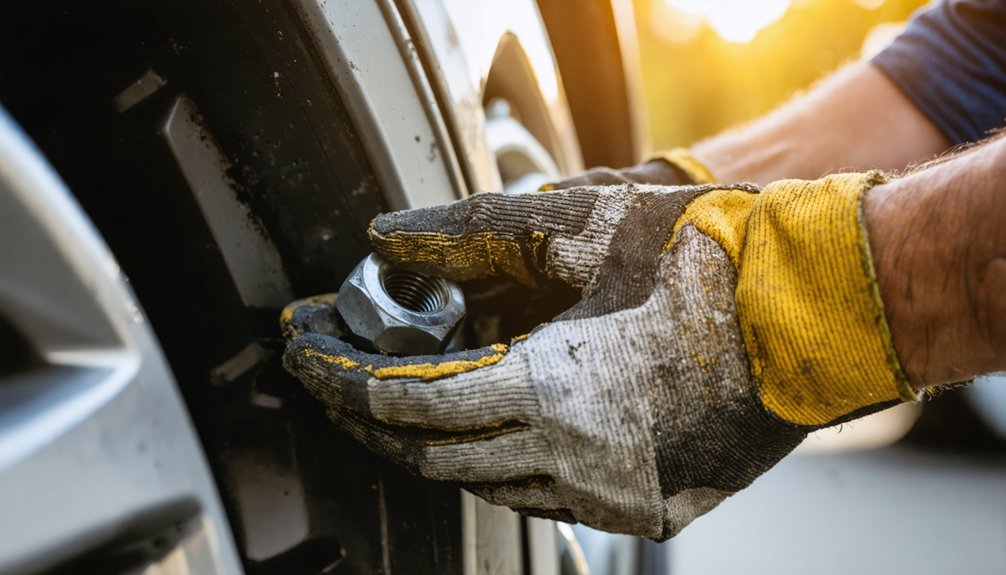

You should follow a simple, consistent routine: set a manufacturer-based service schedule and log every job, check and top off oil, coolant, transmission and brake fluids regularly, and swap fluids per specs. Rotate and balance tires every 5–8k miles, check pressure monthly, and inspect brakes, hoses, and suspension for wear. Protect paint and the underbody from salt, care for the interior, and test the battery seasonally — keep records, and more practical tips follow.
Key Takeaways
- Follow the manufacturer’s maintenance schedule and document every service to preserve warranties and resale value.
- Check and change fluids (engine, transmission, coolant, brake) on schedule and before extreme seasonal conditions.
- Inspect tires monthly: maintain correct pressure, rotate every 5,000–8,000 miles, and monitor tread wear.
- Test battery seasonally, avoid long storage drains, and replace weak batteries before cold weather.
- Perform monthly safety checks on brakes, hoses, belts, and suspension; repair leaks or worn parts promptly.
Establish a Regular Maintenance Schedule
Regularly following a maintenance schedule keeps your vehicle reliable and helps prevent costly repairs down the road. You’ll start with the manufacturer schedule in your owner’s manual as a baseline—those 30-60-90 checkpoints and model-specific intervals are engineered for new vehicles.
Then you’ll apply mileage tailoring: adjust oil, tire, and filter services to your driving patterns, heavy use, or dusty routes. Use oil-life monitors and log semi-annual inspections so services aren’t missed when miles are low.
Combine tasks like tire rotation during oil changes to save time, and use apps to remind your group when maintenance’s due. By customizing the plan together with trusted techs, you protect the vehicle and keep your community of drivers confident and connected. Regular oil changes every 5,000 miles help maintain engine health and prevent premature wear. It’s also smart to have certified technicians inspect brakes and fluids at least twice a year. Fleet managers should follow manufacturer-recommended intervals to prevent unexpected breakdowns and preserve warranties.
Monitor and Manage All Vehicle Fluids
Check your vehicle’s fluids often—engine oil, transmission fluid, coolant, brake fluid, and power steering fluid each play a specific role in keeping systems running smoothly and safely. You’re part of a community that cares for cars; practicing fluid monitoring keeps you and others safe. Check levels monthly and before long trips using dipsticks and reservoir marks on level ground. Inspect color and consistency for contamination indicators—milky coolant or dark, gritty oil signals problems. Follow manufacturer intervals for oil, transmission, coolant, brake, and power steering service, and use approved fluids. Top off when low, flush or replace per specs, and let professionals handle safety-critical procedures like brake flushes. Promptly fix leaks to avoid sudden failures and costly repairs. Regular fluid maintenance also helps extend component life and maintain vehicle efficiency by reducing wear and overheating, so schedule services according to your owner’s manual and professional recommendations. Additionally, fluids also lubricate moving parts to reduce friction and wear. Fresh fluids improve system performance and longevity, so consider scheduled changes based on manufacturer recommendations.
Maintain Proper Tire Care and Rotation
After you’ve kept fluids topped and leaks patched, give the same attention to your tires — they’re the only parts that touch the road and strongly affect safety, fuel economy, and handling.
Check pressure monthly with a reliable gauge when tires are cold, using the vehicle placard or owner’s manual numbers, since under-inflation harms braking and mileage.
Rotate tires every 5,000–8,000 miles to spread wear and extend life, and inspect tread depth with the penny test or wear bars.
Look for cuts, bulges, or embedded objects, and have alignment checked if wear’s uneven.
Schedule tire balancing during service visits and practice air valve maintenance so valves stay leak-free.
These steps keep you and your driving community safer and more confident on every trip.
Tire maintenance also helps improve fuel economy. Rotate tires every 5,000–7,000 miles or every other oil change. Vehicles should be inspected at least once per month for pressure and visible damage.
Inspect Critical Components Monthly
Routinely inspect critical components each month so small problems don’t turn into costly failures. Check brake calipers for leaks, pads above the 3mm minimum, rotors for warping beyond 0.002-inch tolerance, and brake fluid at or above the reservoir minimum; test the parking brake on a 15% incline to confirm holding strength. Verify hydraulic lines and connections for corrosion or seepage. Examine coolant hoses for cracks or bulges and test coolant concentration to maintain a 50/50 mix. Scan power steering and brake fluids for clarity and moisture below 3%. Listen for bearing or suspension noises, inspect shock housings and ball joint boots, and make certain lighting, wipers, and washer fluid all operate reliably. You’re keeping your vehicle—and community—safer. Check tire tread depth monthly with a dedicated gauge to ensure safe contact with the road and optimal handling tire condition.
Prepare for Seasonal Climate Changes
When seasons shift, you should adapt your maintenance routine to protect fluids, tires, batteries and corrosion-prone areas so small seasonal stresses don’t become costly failures.
You’ll check oil, coolant and washer fluid levels, switching to winter-grade fluids before cold sets in and monitoring breakdown faster in heat.
Test battery health before extremes; heat speeds evaporation, cold cuts cranking power.
Watch tire pressure and tread—cold lowers pressure, heat raises it toward blowout risk—inspect after winter for uneven wear.
Replace wipers and clear drainage to prevent water buildup and corrosion from salt and rain.
Use seasonal sensors where available to track changes, and embrace simple climate proofing steps so your vehicle and community of drivers stay reliable, safe, and efficient.
Protect Exterior Paint and Undercarriage
While regular washing and simple coatings won’t make your car immune to the elements, they do keep paint and the undercarriage from deteriorating faster than necessary.
You’ll protect finish and structure by washing weekly with pH-neutral shampoo, using the two-bucket method and soft microfiber tools, then drying thoroughly.
Skip abrasive automatic washes and harsh household cleaners; choose dedicated PPF sealants or ceramic sprays for added hydrophobic protection.
Park in shade or use covers to limit UV and debris damage, and avoid trees to reduce sap and droppings.
In winter, schedule frequent undercarriage wash sessions to remove salt and grit, inspect for chips or corrosion, and apply specialized undercarriage coatings as needed.
Prompt cleanup of contaminants preserves everyone’s pride in your vehicle.
Preserve Interior Condition and Battery Health
Because your cabin sees daily wear and sensitive electronics, keep the interior clean and the battery healthy with a simple routine you can stick to: vacuum seats and mats weekly, wipe high-touch surfaces with a microfiber cloth and isopropyl solution, clean hidden crevices monthly, and condition fabrics or leather quarterly.
You belong to a group that cares for shared spaces, so prioritize cabin hygiene to reduce allergens, stress, and wear.
Use crevice tools and upholstery brushes, avoid bleach or ammonia, and ventilate after steam cleaning.
For battery conditioning, drive regularly, avoid long parasitic loads, and schedule testing each season so cold starts don’t strand you.
These small, consistent steps protect comfort, resale value, and your peace of mind.
Keep Detailed Service Records
Keeping your cabin clean and tracking battery care is only part of responsible vehicle ownership; keeping detailed service records seals the loop by proving you actually maintained the car.
Keep every invoice, oil-change slip (with date, mileage, oil type) and major-component service note for at least three to five years. Save both digital copies and physical originals as service backups so warranty claims and lemon law evidence are airtight.
Log transmission, engine, and safety-system work, plus accident reports, photos and estimates.
A clear history boosts resale and smooths ownership transfers, reassuring buyers and dealers. Consistent documentation helps mechanics spot patterns, supports OEM warranty requirements, and strengthens legal protections — you’ll belong to a group that treats vehicles with intention and care.
References
- https://motorist.org/how-to-ensure-quality-in-vehicle-maintenance-7-best-practices/
- https://supposeudrive.com/fleet-maintenance-best-practices-for-longevity-and-efficiency/
- https://www.evanstire.com/blog/eight-car-maintenance-tips-for-vehicles-with-over-100000-miles
- https://www.consumerreports.org/cars/car-maintenance/how-to-maintain-a-car-that-isnt-driven-much-a6412749580/
- https://www.kbb.com/car-advice/maintenance-guide/
- https://www.caranddriver.com/shopping-advice/a35782575/car-ownership-maintenance-repairs-detailing-car-care/
- https://www.gatewayauto.co/blog/prolonging-your-vehicles-lifespan-a-comprehensive-guide-to-car-maintenance
- https://www.fbfs.com/learning-center/scheduling-car-maintenance-by-mileage
- https://www.geotab.com/glossary/maintenance-intervals/
- https://www.firestonecompleteautocare.com/maintain/recommended-service-schedule/